

How Augmented Reality Is Changing Billboard Advertising
Billboards have been around for decades, and they still work. They account for less than 3% of all North American advertising spend, yet they reach 72% of the population. About 71% of people say they consciously look at billboard ads, a single billboard can rack up thousands of impressions a day, and a Nielsen study found that billboards lifted brand awareness by 20%. Few media types are as efficient, or as effective, as billboards.
QR codes aren’t new to billboards. They’ve long been used to catch the attention of people passing by, and scanning one gives viewers access to online information about whatever is being advertised. Marketers like them because they link the billboard to online content and return useful engagement metrics. They’re especially handy when you have more to say than the space allows. Consumers like them too: 39% say they’d like to see more QR codes, and 67% say they make daily life easier.
Supercharged with AR
Now picture swapping that humble QR code for one of the most engaging and memorable interactive experiences on the market: Augmented Reality, or more precisely WebAR, the web-based version that opens from a QR code. WebAR sees response rates above 40% and click-through rates well over 50%. It also comes with some of the richest behavioral analytics around, including how long people engage, their IP addresses and even the GPS location of each scan. Those numbers are exactly what you need to judge how individual billboard locations are performing. You could call WebAR a QR code on steroids, and paired with the proven pull of billboard advertising, outdoor media moves up a whole level.
One of the biggest advantages of an AR billboard is that it can be far more interactive than a traditional one. A viewer could scan a QR code with their phone to see a 3D model of a product, or to play a game. That kind of interaction grabs attention and holds it.
AR billboards can also be more personal. One could use GPS data to show people nearby businesses or events, for example. Ads that feel relevant like that are more likely to get a response.
They can be more engaging, too. AR ads can take people somewhere else entirely, let them play with virtual objects and give them a much more immersive experience. That helps build a stronger emotional connection between people and brands.
Interactive Signage does more than drive engagement and conversions. It also tells marketers about their customers’ behavior and interests. By tracking interactions, they can see what people are looking for, where they look for it and how they use different experiences. That information feeds into better future campaigns and a clearer picture of the target audience.
All told, AR has the potential to change interactive billboard advertising for good. AR-enabled billboards can be more interactive, more personal and more engaging than traditional ones, and they give brands fresh ways to connect with consumers.
Examples
Here are a few examples of AR at work in interactive billboard advertising:
Calvin Klein: One Calvin Klein billboard carried a bold red QR code and an invitation to “Get It Uncensored.” Scanning it opened an exclusive 40-second AR commercial featuring models including Lara Stone, “AJ” and Sid Ellisdon. Afterward, viewers could share the code on their social accounts. Image source
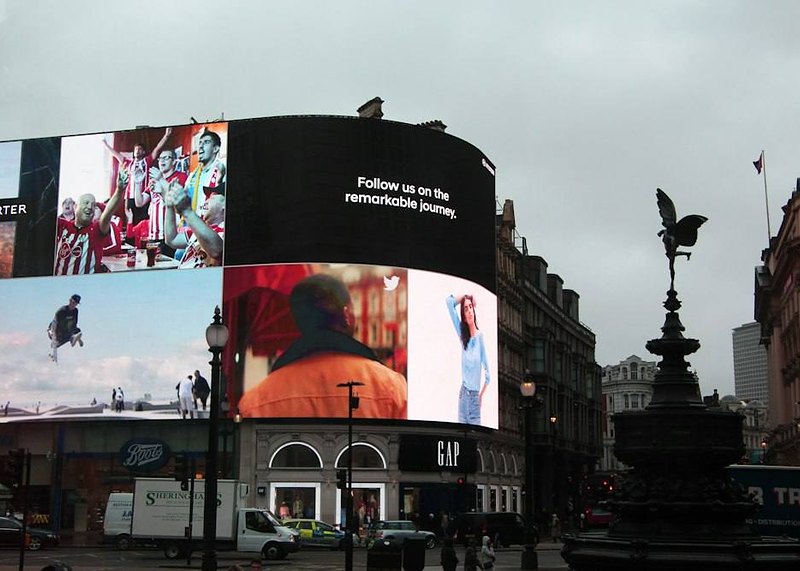
Victoria’s Secret: As part of its “Sexier than Skin” campaign, the lingerie brand built QR codes into its interactive billboards and invited viewers to scan them. Scanning took customers to a landing page showing the latest lingerie collection. Image source
BTS: The hugely popular South Korean band used interactive billboards to give fans access to exclusive content. Scanning the QR code sent fans to the “Armypedia” website, where they could explore different corners of the band’s world. Image source
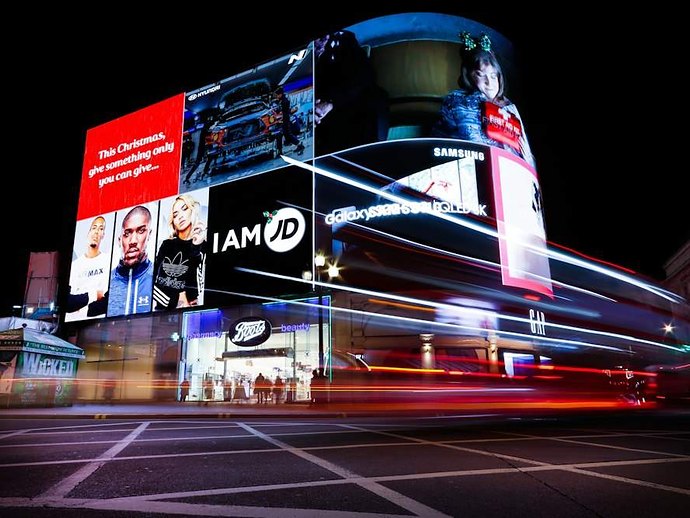
Time Magazine: TIME put an interactive billboard near Times Square in New York City that sent readers to extra web content, including interactive videos, polls and thought-provoking articles on current events. Image source
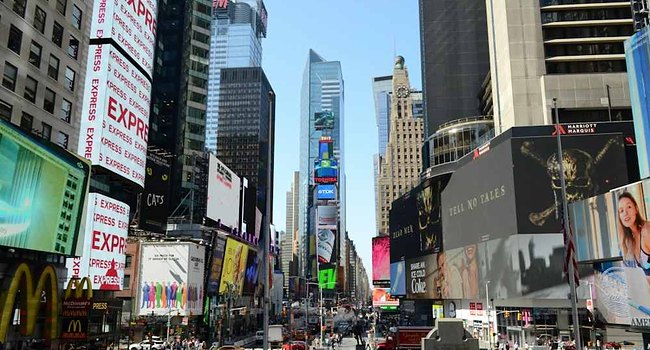
The North Face, Spotify and McDonald’s have also put QR codes on billboards, each in their own way.
Those are only a few examples of AR in billboard advertising. As the technology develops, expect to see even more inventive uses.
Effective Implementation
Putting QR codes and WebAR on a billboard takes the medium to a new level, but there are a few practical things to get right when you plan a campaign.
1. Easy to scan: Make sure the QR code is visible and simple to scan. Think about size and placement, and remember that your audience may only glance at it as they pass.
2. Call to action: Give people a reason to scan. What’s in it for them? Tell them what they’ll get from the interactive content, because the better the offer, the more people engage. Tip: if the content is Augmented Reality, say so. People love AR.
3. Mobile-friendly: Interactive signage, WebAR included, is scanned and viewed on smartphones, so whatever the QR code links to has to work well on a phone. That way viewers can get straight into the content.
Once you understand what QR codes can do and set them up well, your billboard campaigns can become far more interactive and engaging.
If you own a business and want new ways to reach your audience, AR advertising deserves a look. AR billboards can help you run campaigns that people remember and that set you apart from the competition.
Contact us if you’d like to learn more about boosting your billboard advertising with Augmented Reality.